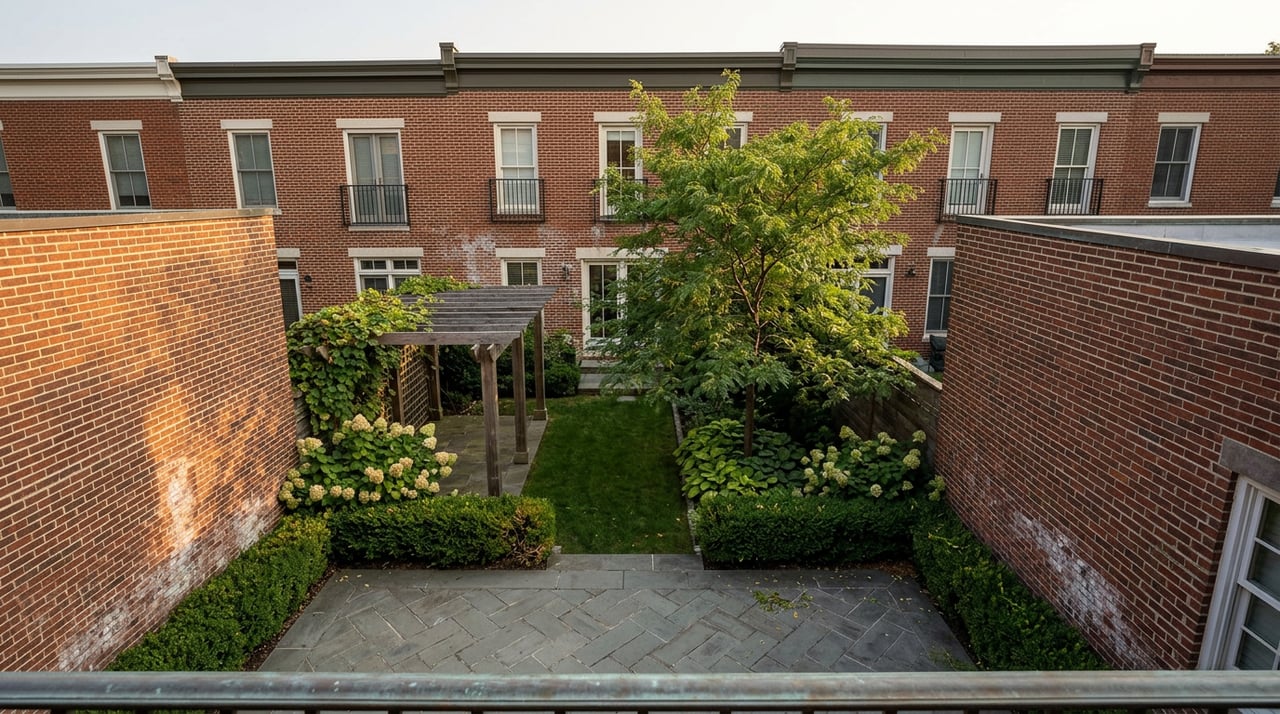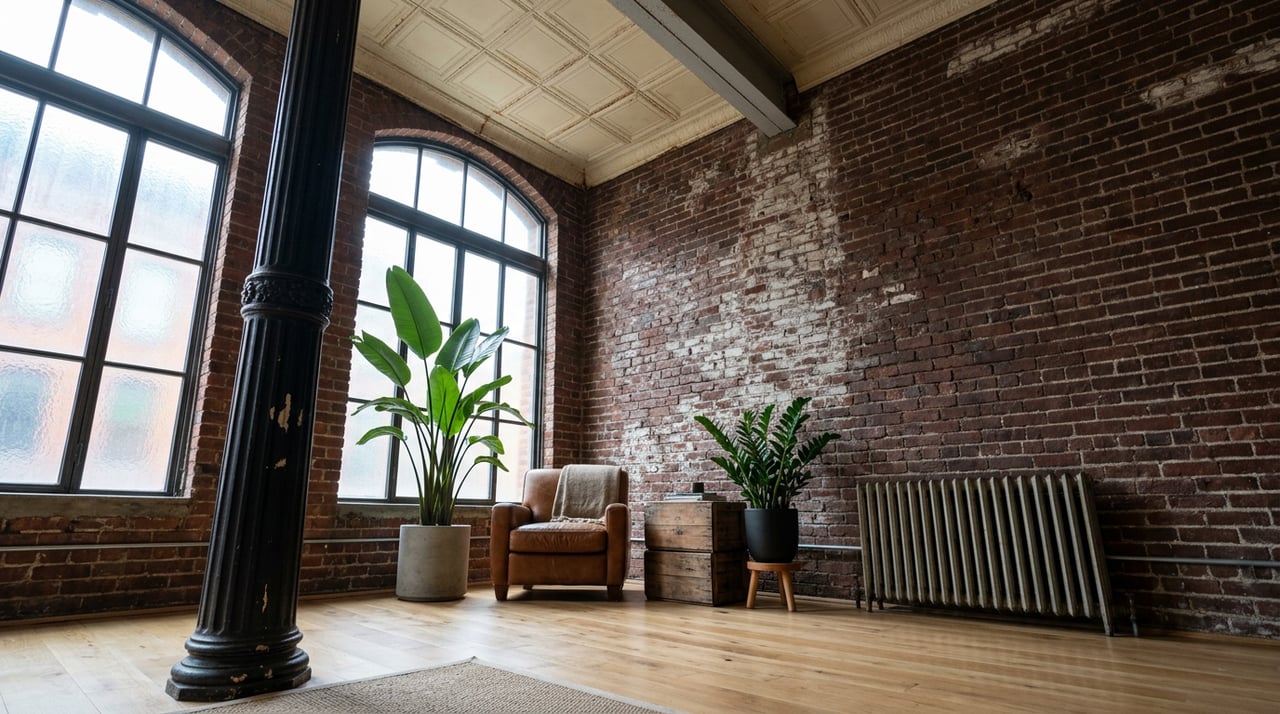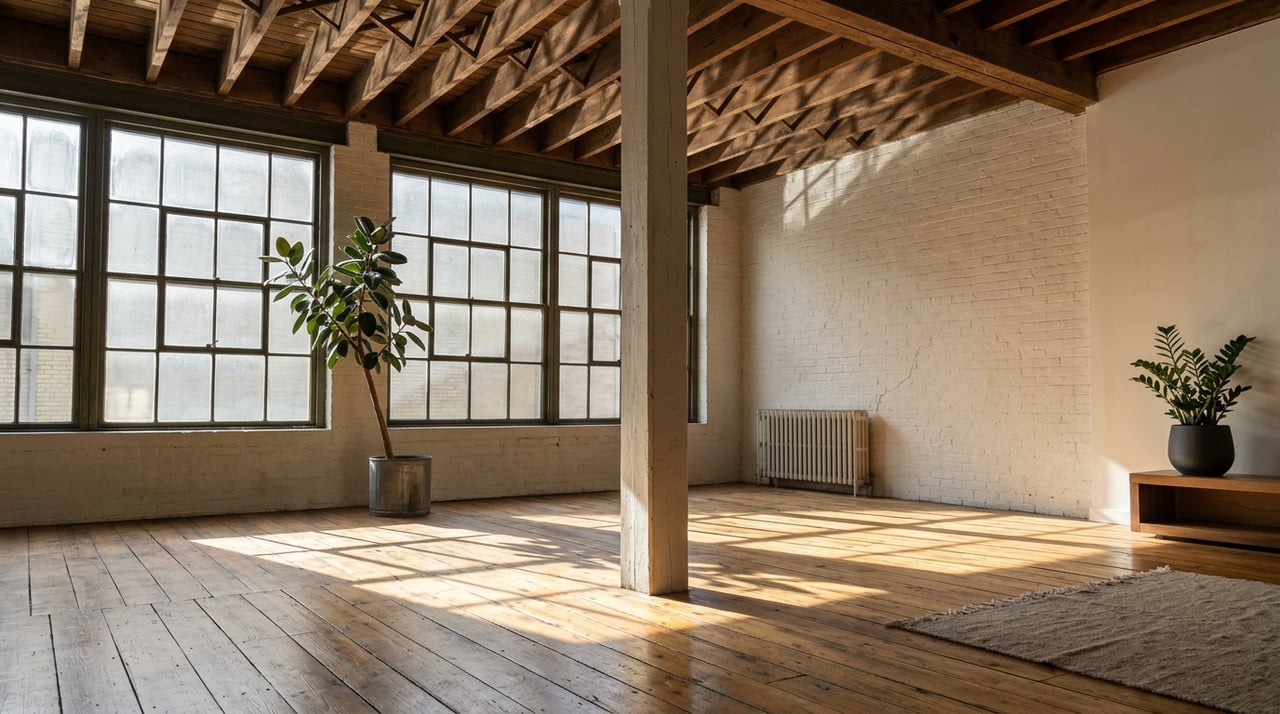
Picture two listings on the same block in Tribeca West. Same square footage, same asking price, same cast-iron facade the broker photos always make look better at golden hour. One closes in six weeks with a conventional mortgage. The other sits for four months, loses its financed buyer at the eleventh hour, and eventually sells to someone paying cash. The apartments look identical. The buildings are not.
That gap is not about staging or negotiation skill. It is about three separate approval layers that most loft listings never mention out loud: whether the building has cleared its legal path from manufacturing use to residential use, whether it sits inside one of Tribeca's landmarked historic districts, and whether it operates as a co-op or a condo. Get the wrong combination and a perfectly good loft becomes a paperwork project. Get the right one and the deal moves like any other Manhattan closing.
The Listing Says Loft. The Records Say Something Else.
Almost every classic Tribeca loft started life as a warehouse, a printing house, or a commercial store-and-loft building, not a home. When artists and other early residents moved into these spaces in the 1970s, the buildings were still zoned for manufacturing. New York State's 1982 Loft Law, formally Article 7-C of the Multiple Dwelling Law, created a category called the interim multiple dwelling to bring those occupied-but-illegal spaces into compliance without evicting the people already living in them.
A building that has completed that legalization process has a residential Certificate of Occupancy and behaves, legally, like any other apartment building. A building still working through it does not. The NYC Department of Buildings' own description of the process lays out what that actually involves: an owner has to hire a design professional to determine the required upgrades, file an alteration application, and complete something called the Narrative Statement Process, a mediation step where existing tenants can object to the legalization plan before the city will issue a permit. None of that happens quickly, and none of it is optional if the building was never brought into full compliance.
Ask early whether a building's Certificate of Occupancy reflects residential use, and if it doesn't, ask what stage of legalization it's actually in. That single question determines whether a lender will touch the deal at all.
Three Bodies Have to Sign Off, Not One
Loft Law status is only the first layer. The second is landmark protection. Tribeca has four separate historic districts, Tribeca West, East, North, and South, all designated by the Landmarks Preservation Commission in 1991 and 1992, with the South district later extended in 2002. Tribeca West alone covers roughly 220 buildings across 17 blocks running from Greenwich Street to West Broadway. If a loft sits inside one of these districts, any exterior change, replacing windows, altering a stoop, adding a rooftop structure, restoring masonry, needs LPC review before the Department of Buildings will issue a permit. The LPC's own FAQ on landmark designation is direct about this: interior work is generally exempt, but almost anything visible from the street is not.
The third layer is ordinary building governance, and it's the one buyers underestimate because it feels the most familiar. Co-ops require board approval, often scrutinize buyer financials more aggressively than condos, and in many Tribeca buildings still charge a flip tax on resale, typically 1 to 3 percent of the sale price, set by the building's bylaws rather than negotiable at the closing table. What's changed recently is that flip taxes have started showing up in Tribeca's newer luxury condo buildings too, used as a way to keep monthly common charges lower rather than as a co-op-only feature. A buyer comparing two listings by price per square foot alone can miss that one building's flip tax adds tens of thousands of dollars at resale and the other's doesn't.
What 385 Greenwich Street Just Proved
If you want proof that this is a live process and not a historical footnote, look at 385 Greenwich Street. The Landmarks Preservation Commission approved a renovation and expansion of that building, joined with the adjacent 71 North Moore Street, in April 2026. The project, designed by DXA Studio, adds one story to 385 Greenwich and two floors atop 71 North Moore, connecting the two with arched steel spans meant to echo the district's industrial infrastructure rather than reproduce it exactly.
That distinction, evoke rather than replicate, is the whole game with LPC review. The commission isn't trying to freeze these buildings in the exact form they had in 1900. It's trying to make sure new work reads as consistent with the district's character, which is a subjective standard that plays out project by project, often after negotiation over materials and massing. For a buyer, the practical takeaway is this: even a well-resourced, professionally designed project in Tribeca West took a formal public review to reach approval. A private buyer planning a rooftop addition or a facade change on a much smaller scale should expect the same layer of review, just at a smaller and slower scale than a ground-up condo conversion.
Co-op or Condo: What Actually Changes at Closing
| Co-op | Condo | |
|---|---|---|
| Board approval | Required, often extensive financial review | Generally not required |
| Mortgage recording tax | Not applicable, shares aren't real property | 1.8% to 1.925% of the loan amount |
| Title insurance | Not required | Typically required by lenders |
| Flip tax on resale | Common, 1 to 3% of sale price, set by bylaws | Increasingly present in Tribeca specifically, same range |
| Financing on IMD/loft-status buildings | Can be harder to get, banks scrutinize legal occupancy status closely | Same concern applies, but resolved-status condos are more standardized |
The mechanics here aren't unique to Tribeca. What's specific to this neighborhood is how often loft-status questions and landmark-district questions layer on top of the ordinary co-op-versus-condo decision, turning what looks like a two-variable choice into a three-variable one.
The Balanced Market Hides a Split Market
As of early September 2026, Tribeca's own numbers describe a market that reads as balanced on paper: 113 active listings, a median asking price around $4.5 million, 22 closed sales in the trailing 30 days at a median close price near $4.1 million, and roughly five months of supply at the current pace of sales. Sixty-two properties were under contract at the same snapshot. None of that looks like a market under stress in either direction.
But that headline number is doing some quiet averaging. Condos made up roughly 82 percent of active Tribeca inventory at that same point, a share too large to be incidental. Financed buyers, which is most buyers at any price point, need a building with a clear Certificate of Occupancy and a straightforward title to get a mortgage approved on any reasonable timeline. Co-ops and lofts with unresolved Loft Law status don't disappear from the market, but they trade in a smaller, more cash-dependent lane that the headline median doesn't separate out. A buyer shopping the aggregate five-months-of-supply number and assuming it applies evenly to every building type is comparing apples to a fruit basket. The paperwork-clean, easily financed segment of the market moves at one speed. The unresolved-status segment moves at another, and mostly moves for buyers who don't need a bank.
A Due Diligence Order That Actually Matches the Risk
- Pull the building's Certificate of Occupancy from the Department of Buildings and confirm it reflects residential use, not a temporary or manufacturing classification.
- Check whether the address falls inside Tribeca West, East, North, or South Historic District using the LPC's landmark search tool, since this determines whether any future exterior work needs commission review.
- If the building shows any history of interim multiple dwelling status, ask directly what stage of Loft Law legalization it has reached and request the paperwork, not just a verbal assurance.
- Request the co-op's or condo's bylaws specifically for flip tax terms and who customarily pays it, buyer or seller, since that's negotiated building by building.
- Review board minutes and financials for at least the past year if it's a co-op, since board approval delays are one of the more common reasons Tribeca deals slip past their expected closing date.
- Ask your lender early, not after signing a contract, whether the specific building's legal status affects loan eligibility or terms.
A Few Straight Answers
Does Loft Law status affect resale value, not just financing? It can. A building still mid-legalization narrows your eventual buyer pool to those who can pay cash or accept financing complications, which tends to show up as a longer time on market rather than a lower price outright.
Is a condo automatically simpler than a co-op in Tribeca? Simpler on approval, yes, generally no board review. Not necessarily simpler on cost, since flip taxes have started appearing in Tribeca condos too, and condos carry the mortgage recording tax and title insurance that co-ops avoid.
Does landmark status mean I can't renovate? No. It means exterior changes need Landmarks Preservation Commission review before the Department of Buildings will issue a permit. Interior renovations are generally outside LPC's scope unless they affect the exterior.
If you're weighing a Tribeca loft against its paperwork rather than just its light and layout, that's exactly the conversation worth having before you write an offer. Rock N Rolla Reeltor® has walked this exact building-status maze with Brooklyn and Manhattan buyers more than once. Let's Connect.