Everyone treated the January ruling as the end of the story. New York's highest court upheld the fee, the city won, case closed, move along. That reading missed the part that actually matters to anyone with a contract on a SoHo loft right now: the ruling didn't settle the fight, it just changed who's placing the bet, and it started a clock that charges you for waiting.
Here's the short version of what happened, and why it should change how you think about buying or selling in the cast-iron blocks south of Houston Street this year.
The Loft Everyone Forgets Is Still Restricted
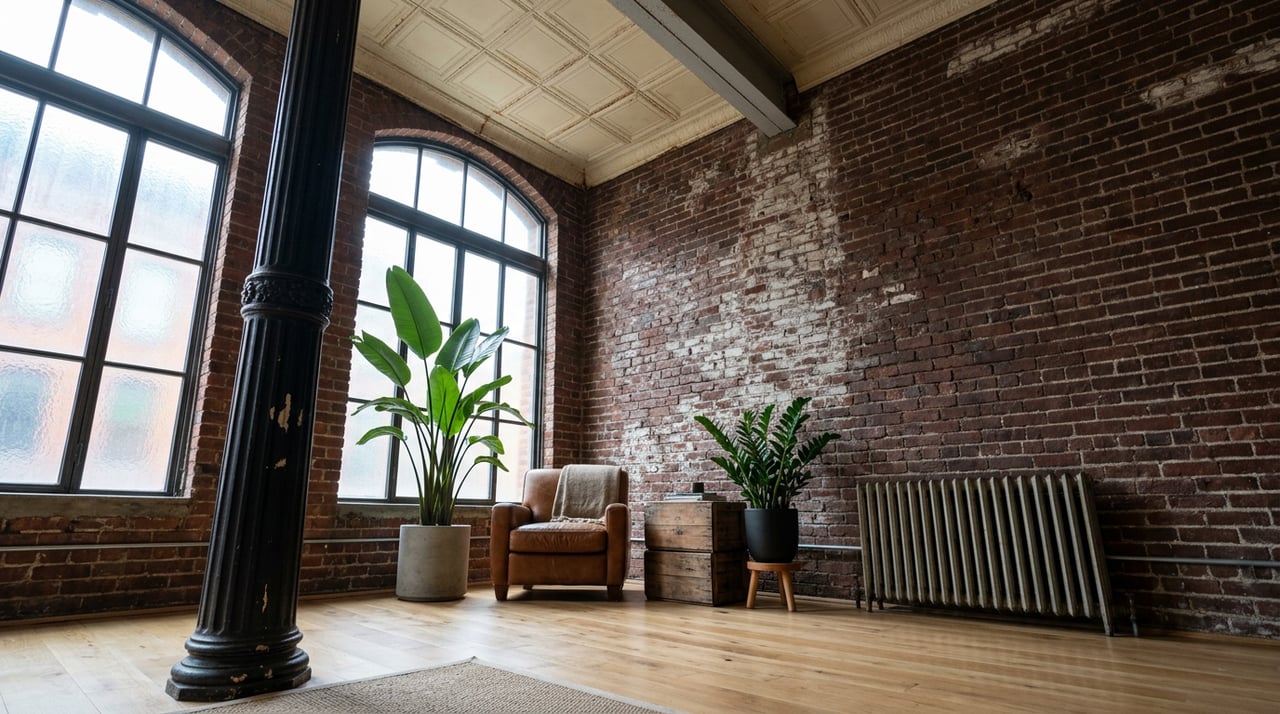
Walk through SoHo and most of what you see reads as pure real estate: exposed brick, twelve-foot ceilings, a doorman in a cast-iron building whose upper floors once housed light manufacturing. What you don't see on a walkthrough is the zoning history sitting in the Certificate of Occupancy, and in roughly 1,600 units across SoHo and NoHo, that history still says Joint Living-Work Quarters for Artists.
The designation dates to 1971, when the city carved out a legal path for the artists who'd already colonized these manufacturing lofts, on the condition that whoever lived there held a certification from the Department of Cultural Affairs. For decades the rule was barely enforced. By 2022, only 36 of those 1,636 designated units were actually occupied by a certified artist, and the city had approved fewer than 100 new certifications in the preceding ten years. Everyone else living there, by then, was there in a kind of legal gray zone that a 2022 amendment to the state's Multiple Dwelling Law papered over: if you already occupied a JLWQA unit before the 2021 SoHo-NoHo rezoning, you could keep living there without becoming an artist yourself.
What that amendment didn't fix is what happens when you try to sell.
The Fee That Turns a Zoning Footnote Into a Closing Cost
The 2021 rezoning gave JLWQA owners a way out: pay the city $100 per square foot of the space being converted, non-refundable, into a fund the city calls the SoHo-NoHo Arts Fund, and your unit stops being an artist-restricted loft and becomes an ordinary residence. On an average-sized loft, owners and their attorneys have put that number at roughly $250,000. For a buyer who isn't certified and isn't planning to become certified, that fee is effectively the price of admission to a unit that, on paper, still requires an artist in residence.
A coalition of longtime residents sued, arguing the fee was an unconstitutional permit condition under the line of Supreme Court cases running from Nollan through Koontz and Sheetz, the same doctrine that limits how much a city can charge a landowner for permission to build. A mid-level appellate panel agreed in December 2024 and struck the fee down entirely.
Then, on January 13, 2026, the New York Court of Appeals reversed that decision in a 6-1 vote. Not because the fee passed the Nollan-Dolan test, but because the court decided that test didn't apply at all. The majority's reasoning was that petitioners never had a property right to the more valuable, unrestricted version of their unit in the first place, so trading a restricted interest for an unrestricted one in exchange for a fee isn't a taking, it's a bargain. You can read the full opinion on the state courts' own reporter.
That 6-1 tally hides something worth knowing before you assume the legal question is closed. Judge Halligan concurred in the outcome but rejected the majority's core reasoning, writing that Judge Garcia's dissent, which treated the fee as a textbook monetary exaction, "has some merit, and it may well eventually prevail." A judge who voted with the winning side told the losing side their argument might still win, just not this round.
The Bet Nobody's Placed Yet
That's the part that changes the math for a 2026 buyer or seller. Pacific Legal Foundation, representing the coalition, has filed a petition asking the U.S. Supreme Court to take the case. This isn't a lone advocacy group grasping at a long shot. The petition is backed by an amicus brief joining the Manhattan Institute with the National Association of Realtors, the New York State Association of Realtors, the National Association of Home Builders, and the National Apartment Association, all arguing the state court read Koontz too narrowly. Attorney Christopher Kieser, who argued the case, has said publicly that even a favorable cert grant would put a new decision more than a year out. Reporting on the case in amNewYork captured the position most JLWQA owners are actually in: waiting, with no guarantee the wait pays off.
Meanwhile the fee itself doesn't sit still. Council Member Christopher Marte, whose district covers SoHo and NoHo, has told reporters the $100-per-square-foot rate is set to rise 3% every year, while he pursues a City Council bill to cut it to something closer to negligible. Nobody knows if that bill moves before the Supreme Court decides whether to even hear the case.
So the actual decision facing a JLWQA owner or a serious buyer isn't legal, it's a wager on timing. Pay the fee now and lock in this year's rate. Wait for a legislative fix that may or may not arrive. Or wait for the Supreme Court, knowing that a "win" is a year or more away and every year of waiting adds 3% to the number you'd eventually pay if the Court declines to hear it or the city ultimately prevails. That's not a footnote for your attorney to mention in passing. That's the deal.
Eighty-year-old artist Zigi Ben-Haim, who's lived in his SoHo loft since 1979, put it plainly when the ruling came down: he had no idea how he and his family would handle it.
Two Kinds of "Loft" That Aren't the Same Transaction
The single biggest mistake I see buyers make when they fall for a classic SoHo space is assuming every loft in the neighborhood carries the same risk. It doesn't. Before you get attached to a listing, find out which category the building actually falls into:
- JLWQA co-ops and condos. Still governed by the artist-restriction designation on the Certificate of Occupancy. Selling to a non-certified buyer, or converting the unit to standard residential use, triggers the Arts Fund fee discussed above.
- State Loft Law buildings, registered as Interim Multiple Dwellings. Governed instead by the NYC Loft Board and completely exempt from the SoHo-NoHo Arts Fund conversion process. Same neighborhood, same cast-iron bones, none of the fee exposure.
The New Museum Building at 158 Mercer Street is a useful example of what a fully resolved building looks like on the other side of this process. Built in the 1890s as an office building, later home to the New Museum of Contemporary Art before its move to the Bowery, it was converted into a straightforward residential condominium in 1996, well ahead of the current dispute, and now trades as an ordinary luxury building with a clear residential Certificate of Occupancy. That's the outcome every JLWQA owner is trying to reach. It's also proof the path exists.
Not every legacy loft has resolved as cleanly. Just this past week, a market roundup flagged a $100,000 price cut on a NoHo loft once owned by jazz legend Charles Mingus, in the same special district still working through this exact fee question. Nobody's confirmed the cut was about JLWQA status specifically, and it may simply be a seasonally slow August. But it's a reminder that legacy artist-loft assets in this district are trading in a market where a buyer's attorney is going to ask about zoning history before they ask about closet space.
What to Actually Ask Before You Sign
If you're circling a loft in this neighborhood, whether you're the one falling in love with the exposed brick or the one who inherited a unit from a parent who's held it since the Ford administration, get these answers before you're deep into a contract:
- Does the building's Certificate of Occupancy show a JLWQA designation, a completed conversion, or Loft Law IMD status?
- If it's JLWQA, is the current occupant grandfathered under the 2022 amendment, or would this sale require the Arts Fund fee to close cleanly?
- Has your lender confirmed it will underwrite a unit without a standard residential CO, or will you need a Temporary CO workaround that could slow financing?
- If you're the seller, has anyone calculated this year's fee rate, given the annual 3% increase, against what you'd save by waiting?
None of these questions kill a good SoHo loft. They just belong in the conversation before the mortgage commitment, not after.
A Few Straight Answers
Do I have to be a certified artist to buy a SoHo loft today? Only if the specific unit still carries an unconverted JLWQA designation and you want to occupy it without paying the conversion fee. Buildings that completed their conversion, or that were never JLWQA to begin with, carry no such requirement.
If the Supreme Court takes the case, does that freeze the fee in the meantime? Nothing in current reporting suggests an automatic freeze. The city's fee schedule, including the 3% annual increase, remains in effect unless a court order or new legislation says otherwise.
Is the fee the same for co-ops and condos? The fee itself is calculated per square foot of the unit converting, regardless of co-op or condo structure. What differs is the approval path: co-op boards may add their own requirements on top of the city's, so budget for board review time either way.
If you're weighing a SoHo loft this year, whether you're chasing the light through six arched windows or trying to figure out what a family loft is actually worth with this fee hanging over it, this is exactly the kind of transaction where local knowledge earns its keep. Rock N Rolla Reeltor® has walked buyers and sellers through the paperwork history of this neighborhood before the headlines caught up. Let's connect before you're the next line item in someone's closing memo.