Trying to choose between Carroll Gardens and Park Slope for a brownstone purchase? You are not alone. Both neighborhoods are iconic Brooklyn townhouse markets, but they offer very different day-to-day experiences, housing patterns, and price expectations. If you want a clearer read on which one fits your goals, this guide breaks down the tradeoffs so you can shop with more confidence. Let’s dive in.
Carroll Gardens vs Park Slope at a Glance
If you zoom out, the biggest difference is feel. Carroll Gardens is the more compact, townhouse-centered neighborhood, known for its deep front-yard setbacks and predominantly residential blocks. Park Slope is larger and more varied, with a broader mix of row houses, flats buildings, apartment houses, churches, and mixed-use avenues.
That difference matters when you are buying a brownstone. In Carroll Gardens, you are often buying into a more uniform street rhythm and a tighter neighborhood footprint. In Park Slope, you get more block-to-block variation, more retail corridors, and more housing types mixed into the streetscape.
What Carroll Gardens Feels Like
Carroll Gardens has a distinct visual signature. NYC Planning describes it as a predominantly residential area of 3- to 4-story row houses, some 4- to 5-story multifamily buildings, and 30-foot-deep front yards on east-west streets that create the neighborhood’s signature “Gardens” character.
For a brownstone buyer, that usually translates into a quieter and more intimate experience. The front-yard buffers create more separation from the sidewalk than you see in many Brooklyn townhouse neighborhoods. If you want a classic residential setting with a smaller daily radius, Carroll Gardens tends to deliver that more consistently.
What Park Slope Feels Like
Park Slope offers a broader canvas. The city’s landmark and planning descriptions point to tree-lined streets, modest-scale blocks, and a wide mix of building types, from single-family row houses to flats buildings and apartment houses, plus some mixed-use stretches.
In practical terms, Park Slope can feel more layered. One block may read as classic brownstone Brooklyn, while the next brings more apartment inventory, busier retail, or a different architectural rhythm. If you like having more options and a neighborhood with more internal variety, Park Slope has the edge.
Brownstone Housing Stock and Layouts
Carroll Gardens Brownstones
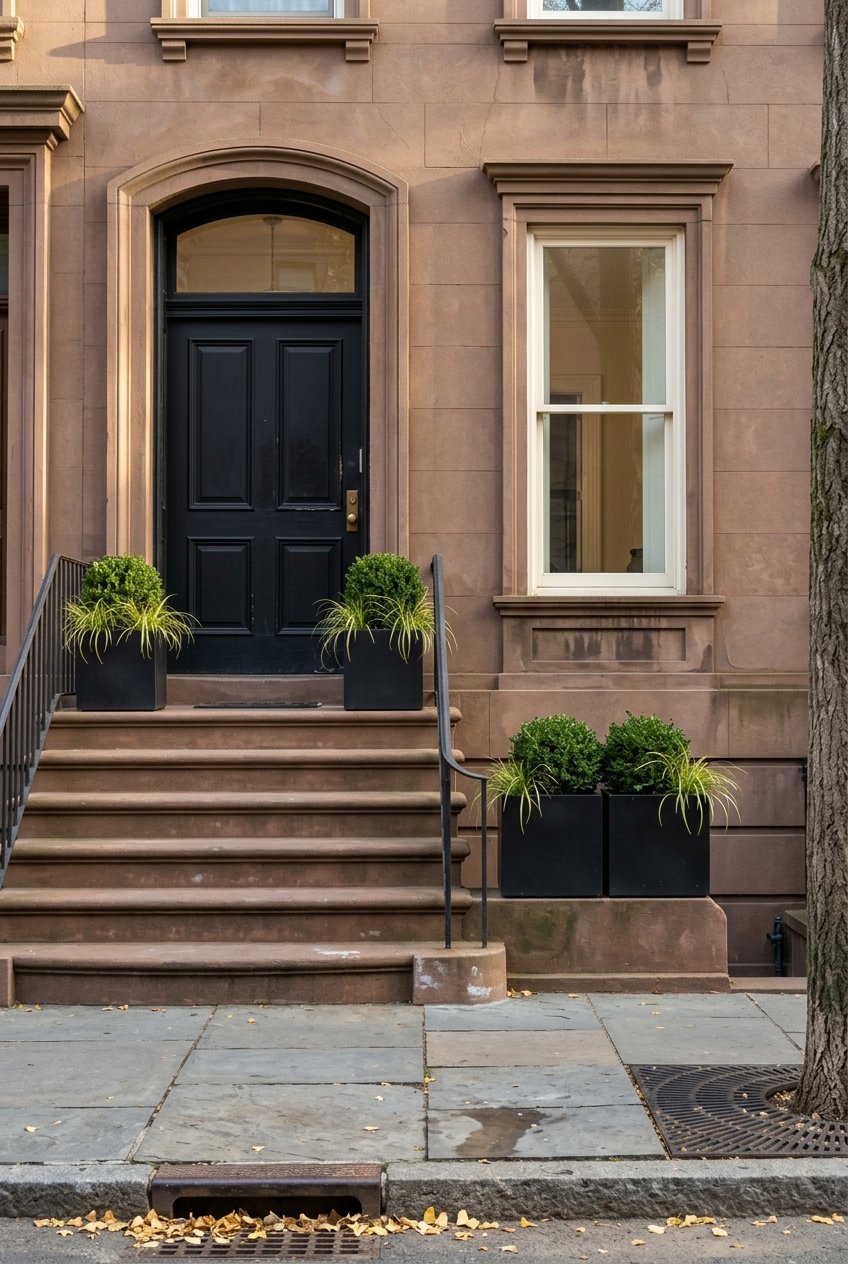
Carroll Gardens is known for late-19th-century brownstone rows in styles such as late Italianate and French neo-Grec. The Landmarks Preservation Commission describes two- and three-story brownstone houses with deep yards, low or high stoops, rusticated basements, segmental-arched doorways, and recurring roof cornices.
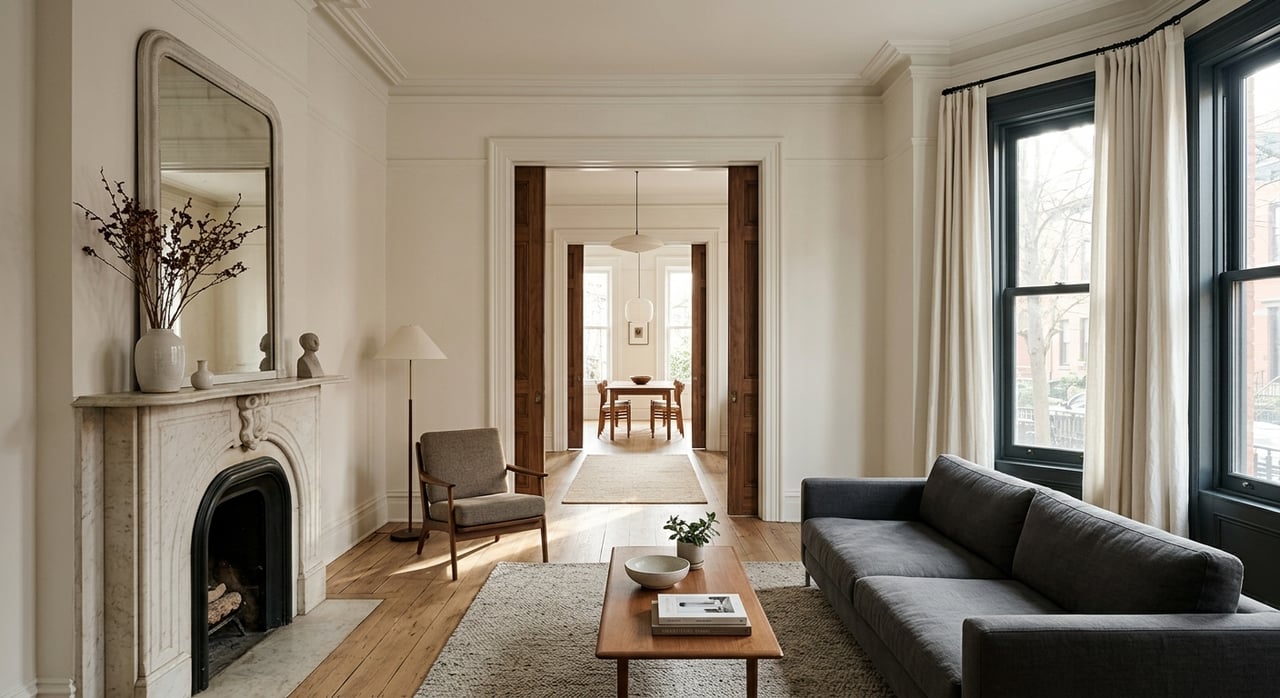
For buyers, that often means a classic townhouse setup with strong indoor-outdoor appeal. Many homes suggest the familiar parlor-floor and garden-level arrangement that brownstone shoppers often want. If your vision is a traditional townhouse with a direct relationship to yard space, Carroll Gardens aligns well with that search.
Park Slope Brownstones
Park Slope has a much broader architectural range. The landmark reports describe single-family row houses and flats buildings in styles including Italianate, neo-Grec, Queen Anne, Renaissance Revival, Romanesque Revival, Beaux Arts, Colonial Revival, Gothic Revival, and Medieval Revival.
That variety opens up more choices, but it can also make the search less uniform. Depending on the block, you may be comparing a classic townhouse to a flats building or looking near mixed-use avenues with a different feel than interior residential streets. If you want flexibility in style and property type, Park Slope gives you more to work with.
Historic Districts and Preservation
Preservation plays a major role in both neighborhoods. Carroll Gardens has a comparatively compact historic district, covering just over 160 buildings on the equivalent of two long city blocks. Park Slope’s landmark protection footprint is much larger, including the original 1973 historic district plus a 292-building extension.
For you as a buyer, the takeaway is not just about architecture. It is also about context. Both neighborhoods have been shaped by efforts to preserve low-rise character, rowhouse scale, and established streetscapes, which helps explain why these areas remain so appealing to brownstone buyers.
Street Life and Retail Corridors
Carroll Gardens Retail and Rhythm
Carroll Gardens concentrates much of its retail life on Smith Street and Court Street. NYC Planning describes these corridors as 3- to 4-story mixed-use blocks with ground-floor commercial and community uses, while the surrounding side streets are intended to remain residential.
That setup creates a neat divide between errands and home life. You can enjoy active local commercial strips without feeling like the whole neighborhood is built around them. For buyers who want residential calm close to retail, that pattern is a strong selling point.
Park Slope Retail and Variety
Park Slope’s main commercial corridors are Fifth Avenue and Seventh Avenue, with additional retail on parts of Eighth Avenue and 9th Street. The city’s rezoning report notes that avenue blocks typically include 4- to 6-story buildings with ground-floor commercial uses and apartments above, while Fourth Avenue has a denser and more commercial character.
This gives Park Slope a broader retail network and a wider range of daily options. It also means your block choice matters a lot. Some buyers love being close to busier avenues, while others prefer quieter interior streets a bit farther from the action.
Transit Access
Transit is good in both neighborhoods, but the network differs. Carroll Gardens is served by the F and G trains at Carroll Street, along with bus service on Court, Smith, 9th, Sackett, and Union Streets.
Park Slope offers broader subway access. According to the city’s Park Slope planning report, you can access M, N, and R service at Union Street and 9th Street, plus the F line at Fourth Avenue and 9th Street. If transit flexibility is high on your list, Park Slope may offer more routing options.
Price Context for Brownstone Buyers
Brownstone buyers need to read neighborhood pricing carefully. Recent all-home median sale price data show Carroll Gardens at $2.884 million in May 2026, according to Redfin, compared with $1.862 million in Park Slope. PropertyShark monthly snapshots also point in the same general direction, with Carroll Gardens at $2.4 million in May 2026 and Park Slope at $1.9 million in April 2026.
But there is an important wrinkle. In Park Slope, house-only pricing can sit far above the neighborhood-wide median because condos and co-ops pull the overall number down. PropertyShark’s April 2026 snapshot shows a Park Slope house median of $5.6 million, versus $1.7 million for condos and $1.2 million for co-ops.
So if you are specifically shopping for a brownstone, the headline neighborhood median is only part of the story. You need to separate townhouse pricing from the broader housing mix. That is especially true in Park Slope, where the range of product types is much wider.
Which Neighborhood Fits Your Priorities?
Choose Carroll Gardens If You Want
- A smaller, more consistent townhouse neighborhood
- Deep front-yard setbacks and a distinctive garden-street feel
- A tighter daily radius centered around Court Street and Smith Street
- A more uniformly residential streetscape
Carroll Gardens tends to fit buyers who want the brownstone version of a well-edited record. The neighborhood has a clear point of view, and that consistency is part of the appeal.
Choose Park Slope If You Want
- A larger brownstone district with more internal variety
- Easier access to Prospect Park
- More retail corridors and transit options
- A wider mix of townhouse, flat-building, condo, and apartment-house choices
Park Slope tends to fit buyers who want more optionality. You may have a broader search field, but you will also need to get more precise about which blocks and housing types match your goals.
A Smart Way to Compare in Person
If you are torn between the two, do not just compare listings online. Walk both neighborhoods with a checklist focused on what actually affects your daily life and long-term satisfaction.
Look at:
- Block-to-block consistency
- Distance from retail corridors
- Yard presence and setback feel
- Transit convenience
- Building type mix on the street
- How much you value a compact neighborhood versus a larger one
This is where local context matters. Two brownstones at similar price points can offer very different living experiences depending on which neighborhood, block, and streetscape you choose.
Final Takeaway for Brownstone Buyers
Neither neighborhood is better across the board. Carroll Gardens is the more intimate, garden-setback townhouse neighborhood, while Park Slope is the broader, park-adjacent brownstone district with more retail and more internal variety.
Your best choice comes down to what you want your Brooklyn brownstone life to feel like. If you want a tighter, more residential townhouse setting, Carroll Gardens may be the right track. If you want a wider field of options with stronger park and retail access, Park Slope may be the better fit.
If you want help comparing specific brownstones in Carroll Gardens and Park Slope, reach out to Steve Schaefer for hands-on guidance and a neighborhood-savvy search strategy.
FAQs
What is the main difference between Carroll Gardens and Park Slope for brownstone buyers?
- Carroll Gardens is generally more compact, residential, and townhouse-centric, while Park Slope is larger, more varied, and offers a broader mix of housing types and retail corridors.
Are Carroll Gardens brownstones more uniform than Park Slope brownstones?
- Yes. Based on city planning and landmark descriptions, Carroll Gardens tends to offer a more consistent brownstone streetscape, while Park Slope has more architectural and property-type variation.
Does Park Slope have more transit options than Carroll Gardens?
- Yes. Carroll Gardens is served by the F and G trains at Carroll Street, while Park Slope has access to M, N, and R service at Union Street and 9th Street, plus the F line at Fourth Avenue and 9th Street.
Is Carroll Gardens usually more expensive than Park Slope overall?
- Recent all-home median sales data cited in the research show Carroll Gardens priced higher overall, but brownstone buyers should look closely at house-specific pricing because Park Slope’s broader housing mix can lower its neighborhood-wide median.
Which neighborhood is better if you want classic brownstone Brooklyn character?
- Both offer classic Brooklyn brownstone character, but Carroll Gardens is usually the stronger fit if you want a smaller and more consistent townhouse setting, while Park Slope is a better fit if you want variety and broader neighborhood amenities.
Should brownstone buyers compare blocks instead of just neighborhoods in Park Slope?
- Yes. Park Slope has more internal variation in housing types, retail intensity, and streetscape, so block-level comparison is especially important there.